Semantiqa · Semantic Engineering Platform

Semantic Engineering for Enterprise AI in Snowflake

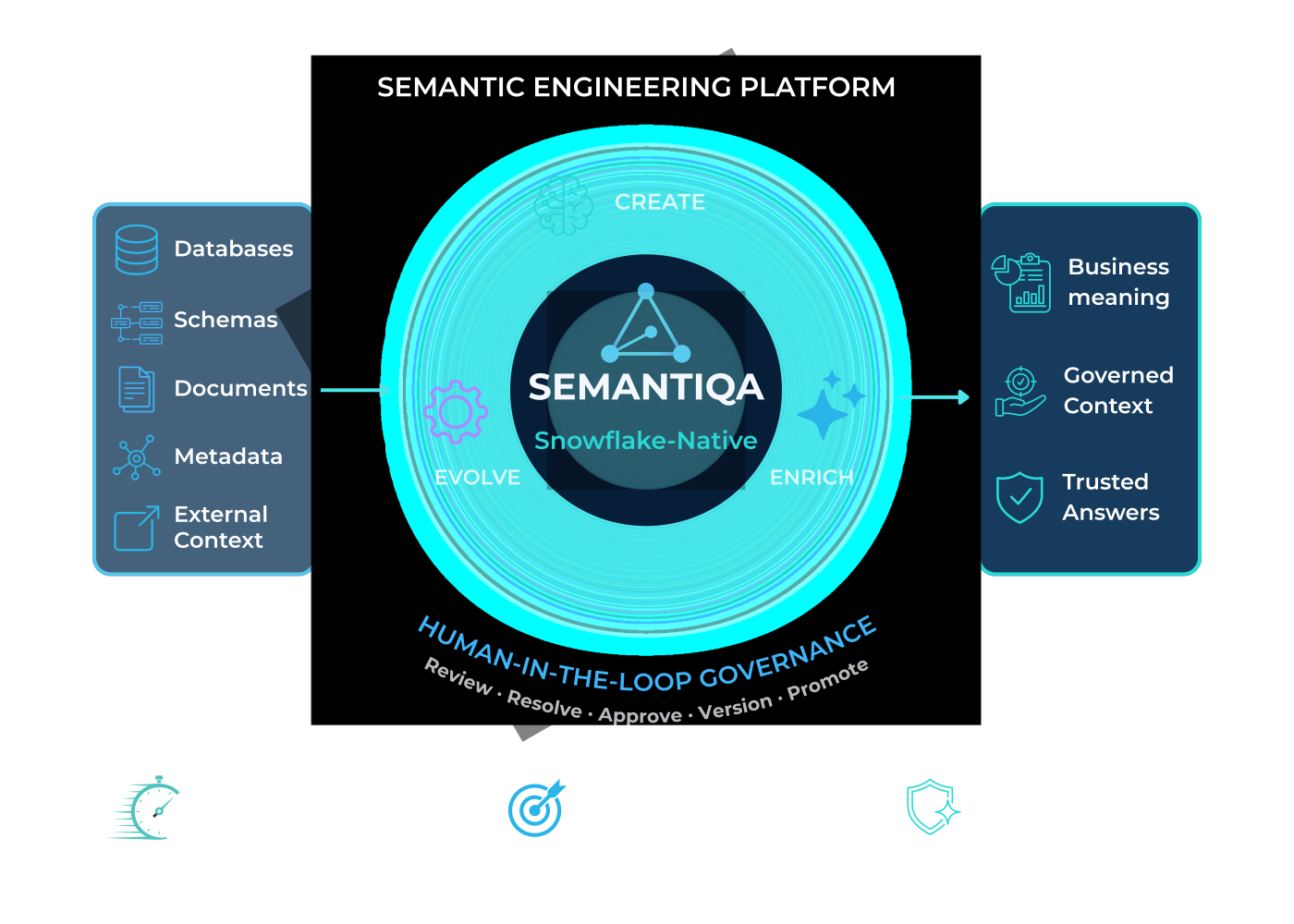
Semantiqa autonomously creates, coordinates and operates the semantic intelligence required for enterprise analytics and AI — across databases, schemas, business domains and environments.

Six coordinated semantic layers.
Human-in-the-loop governance.
Dynamic context at runtime.
Enterprise SemanticOps.
Semantiqa semantic intelligence workflow
What Semantiqa Solves

Enterprise AI Needs
Business Meaning That Scales

As AI expands across schemas, domains and teams, business meaning becomes a continuous engineering and operating challenge — not a one-time modeling exercise.

01

Semantic Engineering at Scale

Hundreds of tables, schemas and domains turn semantic engineering into recurring enterprise work.

Semantiqa

Autonomous Semantic Engineering

Semantiqa autonomously discovers, builds and enriches complete business meaning across enterprise data.

Discover · Build · Enrich
02

Business Meaning Spans Domains

Enterprise questions cross schemas and business domains while definitions and context are distributed across the enterprise.

Semantiqa

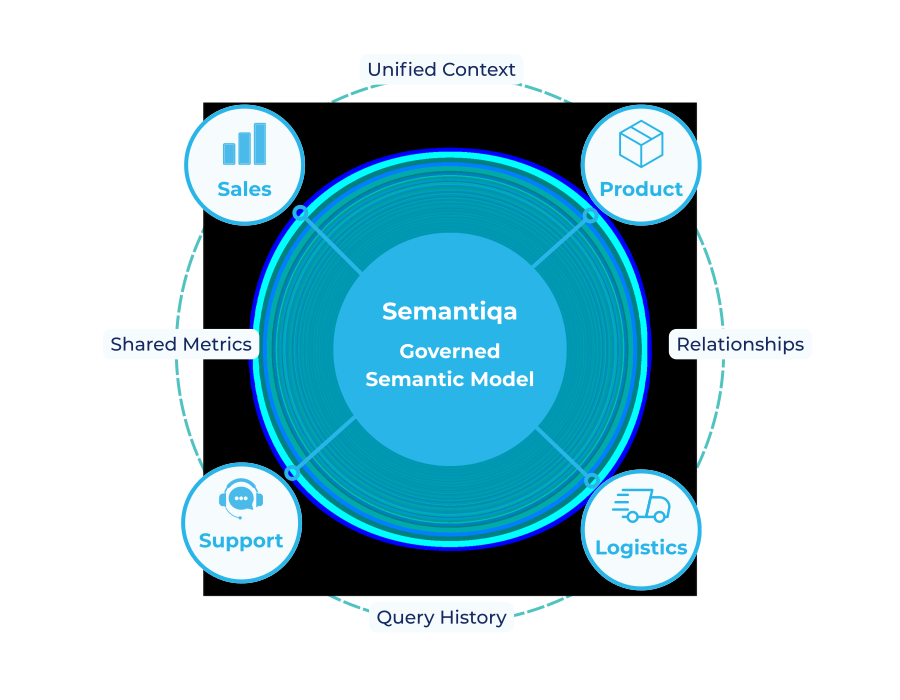
Cross-Domain Semantic Intelligence

Connect business meaning across schemas, databases and domains as one coordinated semantic system.

Connect meaning across schemas and domains
03

Every Question Needs the Right Context

The governed semantic context needed for one business request may be completely different from the next.

Semantiqa

Intent-Driven Context Routing

Interpret each request and dynamically select the governed semantic context relevant to that question.

Right governed context at runtime
04

Business Meaning Keeps Changing

Metrics, relationships, policies and definitions evolve. Production semantics need controlled change.

Semantiqa

Enterprise SemanticOps

Manage semantic change with validation, version control and controlled promotion across environments.

Validate · Version · Promote · Operate
Autonomous creation. Human control where it matters. Build enterprise semantic intelligence, govern it continuously and operate it across environments — natively in Snowflake.
Semantiqa Platform

Create, Govern, and Deliver Trusted Semantic Intelligence

Semantiqa combines autonomous semantic engineering with human control and enterprise lifecycle management — natively in Snowflake.

01Create

Build the Enterprise Semantic Model

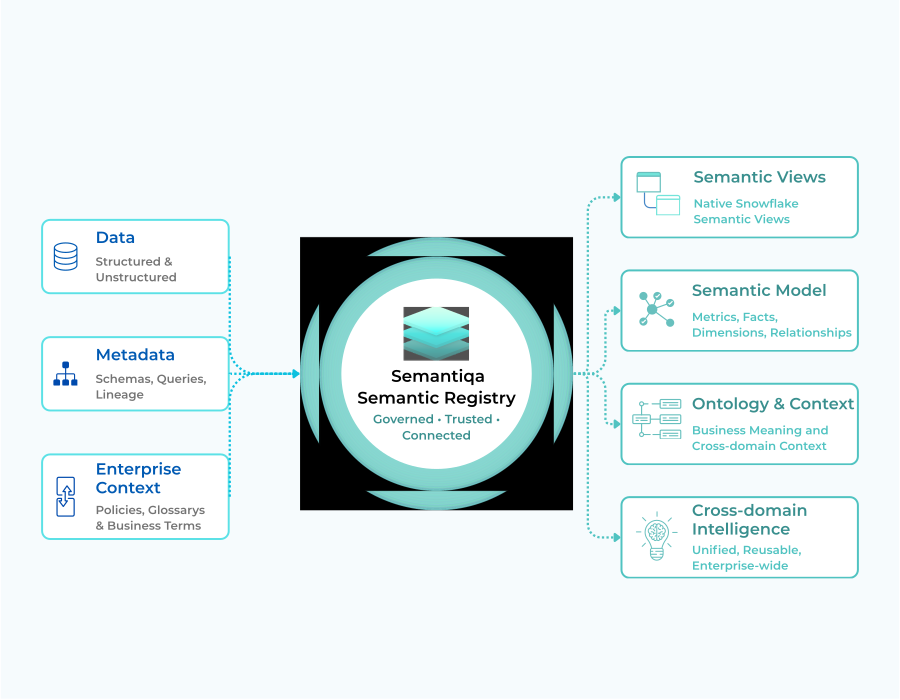
Autonomously discover business structure and create facts, dimensions, metrics, relationships and cross-domain context across selected Snowflake schemas and domains.

Registry · Metrics · Relationships · Cross-Domain Context
Registry Facts Dimensions Metrics Relationships
02Native

Generate Snowflake Semantic Views

Create native Snowflake Semantic Views as part of the broader semantic estate — preserving reusable Snowflake-native assets for Cortex and other Snowflake AI experiences.

Native Semantic Views · Metrics · Joins · Relationships
METRICS SEMANTIC VIEW JOINS SNOWFLAKE NATIVE
03Govern

Validate, Enrich & Resolve Conflicts

Combine autonomous creation with human business judgment. Review semantic definitions, enrich context, validate behavior and resolve conflicts before approved semantics become production assets.

Validation · Enrichment · Conflict Resolution · Human Review
Conflict Review Approved
04Operationalize

Version, Publish & Promote

Manage semantic assets through controlled versions, publishing and promotion across DEV, TEST and PROD — without rebuilding the semantic estate for every environment.

Version · Publish · DEV → TEST → PROD · Rollback
v1.3 DEV TEST PROD CONTROLLED PROMOTION
Reuse Governed Intelligence
Semantiqa Chat · Self-Service Analytics · Snowflake AI · External Agents via MCP / APIs
The Semantiqa Lifecycle

From Semantic Creation to Enterprise SemanticOps

Semantiqa manages the complete semantic lifecycle — from autonomous discovery and creation to governed production operation.

01
Discover
Metadata · Query History · Structure
02
Build
Metrics · Relationships · Semantic Views
03
Enrich
Definitions · Documents · Policies
04
Validate
Questions · SQL · Business Rules
05
Version
Draft · Compare · History
06
Promote
DEV → TEST → PROD
07
Operate
Audit · Monitor · Rollback
Human-in-the-Loop Governance
Conflict Resolution · Review & Approval · Publishing · Promotion Controls
Autonomous
Create semantic intelligence at enterprise scale.
Controlled
Validate and govern change before production.
Operational
Version, promote and evolve semantics continuously.
Build once. Govern continuously. Deploy everywhere. Turn semantic meaning into a governed, versioned and deployable enterprise asset. Explore Enterprise SemanticOps
Snowflake Semantic Model Management

Build, Validate, and Publish Snowflake Semantic Models.

Semantiqa helps teams create, manage, validate, and publish governed semantic models for Snowflake. It connects business metrics, source metadata, governance terms, and AI-powered analytics in one reusable semantic registry.

Snowflake Semantic Model YAML Upload Snowflake Semantic Model YAML files and preview changes before applying them to your registry.
Metadata Refresh and Schema Drift Refresh registry metadata from Snowflake to detect schema changes and update semantic definitions safely.
Governance Metadata Enrichment Connect Collibra metadata to enrich your semantic registry with glossary terms, ownership, and classifications.
Conflict Review Resolve semantic model conflicts when incoming metadata cannot be merged automatically.
Validation and Publishing Validate semantic views before publishing them for chat, dashboards, and analytics workflows.
Access Control Control access with application roles, registry permissions, and Snowflake object privileges.
SemanticOps Promotion Version, publish, and promote governed semantic definitions across development, test, and production environments.
Competitive Landscape

Semantiqa Competitive Landscape

Capability comparison across setup time, architecture, governance, and operational maintenance.

Capability Semantiqa Manual Modeling Tools External Semantic Layers Text-to-SQL Only
Setup Time 15–20 Minutes Days to Weeks Weeks to Months Hours to Days
Native to Snowflake Yes — 100% Native App Varies No (External SaaS) Varies
Auto-Generated Views Fully Automatic Manual Config Manual Config No Semantic Layer
Dual User Modes Auto + Select Agent Single Mode Single Mode Single Mode
Data Movement Zero — stays in Snowflake Varies Required Varies
Semantic Governance Built-In, Structural Yes Yes Limited
Maintenance Required Auto-Adapting High (YAML/Code) Medium Medium
Semantiqa builds the intelligence foundation that lives inside Snowflake — making your data, your BI tools, and your AI applications more accurate, more consistent, and more trusted.
FAQ

Questions We Always Get Asked

What is a Snowflake semantic layer? +
A Snowflake semantic layer defines trusted business meaning for metrics, dimensions, entities, and relationships used by analytics and AI. Semantiqa creates and operates this governed semantic layer inside Snowflake so teams and AI systems use approved definitions.
How does Semantiqa create Snowflake semantic models from metadata? +
Semantiqa analyzes Snowflake metadata, query history, documents, and governance context to create reusable semantic models and a semantic registry. Teams can review, enrich, validate, and publish those models before they are used by chat, dashboards, and analytics workflows.
Can Semantiqa manage Snowflake Semantic Model YAML files? +
Yes. Semantiqa supports Snowflake Semantic Model YAML lifecycle workflows, including upload, preview, conflict review, validation, version control, and publish or promotion across environments.
How does Semantiqa detect schema drift in Snowflake semantic models? +
Semantiqa refreshes registry metadata from Snowflake and compares incoming structural changes against governed semantic definitions. When schema drift or conflicting metadata is found, it routes the change through human-in-the-loop review before publishing.
How does Semantiqa support governed natural language analytics on Snowflake? +
Semantiqa gives business users an enterprise data chatbot and AI dashboard experience backed by approved metrics, relationships, Snowflake access controls, and semantic context. Answers are grounded in governed definitions rather than raw table guesses.
Does data leave Snowflake when using Semantiqa? +
No. Semantiqa is delivered as a Snowflake Native App and runs inside your Snowflake environment. Data remains in your account under your existing governance, RBAC, masking, and security policies.
Can Semantiqa promote semantic models between development, test, and production? +

Yes. Semantiqa supports controlled promotion of governed semantic models across development, test, and production environments. Teams can version and publish a registry in one environment, export it, and import it into the next environment without rebuilding the semantic model.

Before promotion, changes can be reviewed, validated, and approved, helping maintain consistent semantic definitions across environments while reducing configuration drift.

How does human-in-the-loop review work? +

Semantiqa combines autonomous semantic creation with human review at the points where business judgment is required. When new metadata, imported semantic models, governance definitions, or schema changes introduce conflicting information, Semantiqa identifies the conflict instead of automatically overwriting an approved definition.

Authorized users can review the proposed changes, compare definitions, edit or enrich metrics and business terms, resolve conflicts, and validate the resulting semantic behavior. Once approved, the updated version can be published and promoted through development, test, and production under controlled permissions.

This allows Semantiqa to automate semantic engineering at scale while keeping people responsible for business meaning and production approval.

What are Semantiqa's six semantic layers? +

Semantiqa coordinates six complementary layers of semantic intelligence:

  1. Business Entities and Dimensions defines the business objects, descriptive attributes, hierarchies, and dimensions through which enterprise data is understood.
  2. Metrics and Business Logic defines governed measures, calculations, aggregations, filters, and business rules so users and AI systems calculate results consistently.
  3. Relationships and Cross-Domain Context connects tables, entities, schemas, and business domains so questions can be answered across organizational and data boundaries.
  4. Ontology and Business Meaning organizes business concepts, terminology, classifications, and relationships into a connected representation of enterprise meaning.
  5. Intent and Runtime Context interprets each request and selects the metrics, relationships, policies, domains, and other governed context relevant to that question.
  6. Governance and SemanticOps manages enrichment, validation, conflict resolution, access control, versioning, publishing, promotion, audit history, and ongoing semantic change.

Together, these layers provide more than a static semantic model. They create a governed semantic-intelligence system that can support analytics, AI applications, and cross-domain enterprise questions.

How can Semantiqa semantic intelligence be consumed? +

Semantiqa allows the same governed semantic intelligence to be reused across analytics, AI, and application experiences. Depending on the integrations enabled in the customer environment, it can be consumed through:

  • Semantiqa Chat, for governed natural-language questions and answers
  • Dashboards and self-service analytics, using approved metrics and relationships
  • Snowflake Cortex and Cortex Agents, through Snowflake-native semantic views and governed business context
  • Snowflake CoWork, to support enterprise analysis using trusted semantic definitions
  • MCP clients, through Semantiqa's MCP server and exposed semantic tools
  • APIs, for custom applications, copilots, and workflow integrations
  • External AI agents, which can retrieve governed semantic context rather than querying raw schemas directly
  • BI tools, which can use or contribute definitions while remaining aligned with the governed semantic registry
Can Semantiqa generate dashboards from natural language prompts? +
Yes. Semantiqa connects governed semantic definitions to AI data analytics, enterprise data chatbot workflows, and AI dashboard builder experiences so answers and dashboards share the same business logic.
Get Started
See Semantiqa Build
Your Semantic Intelligence
Live.
Book a 30-minute demo and watch Semantiqa scan your actual Snowflake schema, generate governed Semantic Intelligence, and deploy AI agents — all in under 20 minutes. Bring your skeptic.
30-day free trial available — contact us to extend beyond Marketplace's default